
 20.02.2026 – Reuters – Sweden’s FSA to probe Swedbank compliance with money laundering regulations
The Swedish Financial Supervisory Authority (FSA) has launched an investigation into Swedbank’s compliance with anti-money laundering and counter-terrorist financing rules, covering the period December 2023 – November 2025. The review focuses on the effectiveness of the bank’s internal control systems, coming after a similar investigation by the US Department of Justice closed in January 2026 without sanctions.
You can read more here.

08.11.2025 – Reuters, Hungary says its waiver from US Sanctions are on unlimited time, US states its for 1 year
Hungary said it had obtained an indefinite waiver from U.S. sanctions to use Russian oil and gas, but a White House official reaffirmed that the exemption was for one year only.
Last month, U.S. President Donald Trump imposed Ukraine-related sanctions on Russian oil companies Lukoil and Rosneft that carried a threat of further sanctions against entities that buy oil from those firms.
Hungarian Prime Minister Viktor Orban, a longtime Trump ally, met with Trump at the White House on Friday to press for a reprieve. Hungary relies heavily on Russian energy and Orban, 15 years in power, faces a close election next year.
You can read more here.
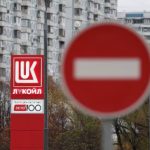 November 2025: Gunvor and Lukoil – a short dream, amid accusations of Russia controlling Gunvor
In the last week of October 2025, Lukoil announced that it received an offer from the trader Gunvor to sell its assets, further US sanctions. The sale needed OFAC approval and public rumors talked of Putin involvement in Gunvor.
A few days later, Gunvor withdrew its offer, after US called it “Russia’s puppet” and stated that the transaction would not be allowed.
You can read more here, on Reuters page (Reuters = source of picture also).
 22.10.2025 – OFAC Sanctions Major Russian Oil Companies – Lukoil and Rosneft
OFAC imposed severe sanctions as a result of Russia’s lack of serious commitment to a peace process to end the war in Ukraine. The sanctions target Lukoil and Rosneft and blew the whole world into the air.
You can read more here.
 Iran sanctions snapback: UN, EU and UK
The European Union reimposed restrictive measures against Iran in connection with its nuclear proliferation activities. The decision follows the reactivation of United Nations sanctions, after the UN Security Council declined to extend the suspension of previous measures. Triggered by the so-called “snapback mechanism” under the Joint Comprehensive Plan of Action (JCPOA), initiated by France, Germany, and the United Kingdom (E3), the move effectively ends nearly a decade of eased restrictions. The renewed EU measures target financial assets, travel, and trade, reinstating oversight and pressure on Tehran’s nuclear ambitions.
In parallel, the United Kingdom reinstated UN sanctions on Iran on October 1, 2025, completing the snapback process. The measures restore 121 designations of individuals and entities linked to Iran’s nuclear and ballistic missile programs. British authorities emphasized that Iran’s persistent non-compliance with JCPOA obligations warranted a full reactivation of sanctions, aligning London with EU and UN actions. The coordinated response between the E3 nations reflects a tightening international stance on Iran’s nuclear activity — signaling that diplomatic patience has given way to renewed enforcement.
You can read more here:
 11.07.2025 – ASF Romania ASF Adopts Regulation No. 3/2025 on International Sanctions Supervision
On 23 July 2025, the Romanian Financial Supervisory Authority (ASF) published Regulation No. 3/2025 on the supervision of the implementation of international sanctions by regulated entities, repealing Regulation No. 25/2020. The new framework, effective from 21 September 2025, introduces significant changes, including the mandatory appointment of an International Sanctions Compliance Officer (OCSI), entity-wide and individual risk assessments on sanctions evasion, standardized electronic reporting to ASF, and enhanced governance and training requirements.
With a stronger emphasis on risk-based supervision, regulated firms must ensure immediate reporting of frozen funds, cross-border transfers under specific circumstances, and annual compliance reviews. The Regulation marks a shift toward a more structured and transparent compliance environment for insurance, investment, and private pensions markets under ASF’s supervision.
You can read more here.
 10.07.2025 – US imposing sanctions on senior UN official focused on Palestinian human rights
In a post on X, US Secretary of State Marco Rubio said he was imposing the sanctions against Francesca Albanese, who holds the title of UN special rapporteur on the situation of human rights in the Palestinian territories, “for her illegitimate and shameful efforts to prompt (International Criminal Court) action against U.S. and Israeli officials, companies, and executives.”
The announcement is the latest effort by the US to punish those looking into alleged crimes committed by Israel as the war in Gaza continues. President Donald Trump issued an executive order in February authorizing punitive measures against the ICC because of its “illegitimate and baseless actions targeting America and our close ally Israel.”
You can read more here.
01.07.2025 – US lifts Syria Sanctions
The US has removed Syria’s oil ministry, its two refineries and maritime authority from its sanctions list.
Some sanctions were left in place, like those on the former Bashar al-Assad regime, and some individuals linked to the old regime or Iran will remain sanctioned.
You can read more here.
 26.06.2025 – MONEYVAL – Romania has made limited progress in enhancing its framework against money laundering, terrorist financing and proliferation financing
Romania has taken several steps to enhance its measures to counter money laundering, terrorist financing and the financing of proliferation of weapons of mass destruction, including regarding targeted financial sanctions, but still needs to address several moderate shortcomings, concludes MONEYVAL.
MONEYVAL finds that Romania has made limited progress in addressing technical compliance deficiencies affecting the application of Financial Action Task Force (FATF) recommendations on targeted financial sanctions, virtual assets and virtual assets service providers, and statistics. The report highlights that the progress made was not sufficient to upgrade the compliance ratings of the four recommendations concerned, which remain rated “partially compliant”.
Out of the 40 FATF recommendations, Romania continues to be rated as compliant on seven recommendations, largely compliant on 18 recommendations and partially compliant on 15 recommendations.
Romania will remain under MONEYVAL’s enhanced follow-up procedure.
You can read more here.
 26.06.2025 – FATF published its Targeted Update on Implementation of the FATF Standards on Virtual Assets and Virtual Asset Service Providers
The report assesses jurisdictions’ compliance with the FATF’s Recommendation 15 and its Interpretative Note (R.15/INR.15), which was updated in 2019 to apply AML/CFT measures to VAs and VASPs. It finds that overall, jurisdictions—including those with materially important VASP activity—have made progress since 2024 towards developing or implementing AML/CFT regulation and taking supervisory and enforcement actions.
You can read more here.
25.06.2025 – FATF updates Guidance Paper on Anti-Money Laundering and Terrorist Financing Measures and Financial Inclusion
The Guidance Paper does not provide a single model for promoting financial inclusion in the anti-money laundering / countering the financing of terrorism (AML/CFT) context. Instead it shares country experiences from both developed and developing countries to highlight different ways to promote financial inclusion through a risk-based approach. The Guidance Paper was initially published in 2011 and was revised and enhanced in 2013 and 2017 respectively.
You can read more here.
13.06.2025 – FATF updated its grey list
Croatia, Mali, and Tanzania were removed from the Grey List while Bolivia and The Virgin Islands (UK) were added to the FATF’s Grey List.
Jurisdictions under increased monitoring are actively working with the FATF to address strategic deficiencies in their regimes to counter money laundering, terrorist financing, and proliferation financing. When the FATF places a jurisdiction under increased monitoring, it means the country has committed to resolve swiftly the identified strategic deficiencies within agreed timeframes and is subject to increased monitoring. This list is often externally referred to as the “grey list”.
You can read more here.
 10.06.2025 – European Commission updates list of high-risk countries
The European Commission updates its list of high‑risk jurisdictions presenting strategic deficiencies in their national anti‑money laundering and countering the financing of terrorism (AML/CFT) regimes.
Third‑country jurisdictions were added to the list – Algeria, Angola, Côte d’Ivoire, Kenya, Laos, Lebanon, Monaco, Namibia, Nepal and Venezuela. Jurisdictions delisted are Barbados, Gibraltar, Jamaica, Panama, the Philippines, Senegal, Uganda, and the United Arab Emirates.
You can read more here.
 04.06.2025 – The EU announced that Bulgaria has met all the conditions for the Euro zone
These criteria are – Low inflation, Fiscal discipline (deficit & debt under control), Stable exchange rate (ERM II), Low long-term interest rates
According to the Eurogroup President, Paschal Donohoe
Bulgaria’s euro area membership will not only mark a significant achievement for the country with important benefits for its economy, but will also reinforce the strength, resilience, and voice of the euro area. This development reflects the enduring stability and attractiveness of our common currency.
You can read more here.
 29 May 2025 – The Romanian Constitutional Court decided that PEP wealth must no longer be transparent!
Asset and interest declarations will no longer be published and will no longer include details about the assets of spouses and children, following a decision by the Constitutional Court of Romania (CCR), which ruled that two articles of the law regulating this matter are unconstitutional.
The National Integrity Agency (ANI) responded by warning that Romania’s international commitments will be affected, and several political leaders have spoken about the need for transparency regarding the assets of public officials.
You can read more here.
20 May 2025 – Russia’s war of aggression against Ukraine: EU agrees 17th package of sanctions
The Council adopted the 17th package of economic and individual restrictive measures cutting off Russia’s access to key military technology and curbing Russia’s energy revenues that fuel its war of aggression against Ukraine, by heavily targeting Russia’s ‘shadow fleet’ of oil tankers, their operators, as well as a major Russian oil producer.
The 17th package is part of an even broader set of EU measures also targeting the Russia’s hybrid activities, domestic violations of human rights and the use of riot control agents by Russian forces in Ukraine, under three other sanctions regimes.
You can read more here.
 15 May 2025 – Transparency International – From real estate to yachts: What do we know about assets across the EU?
Over the past decade, the EU has been gradually strengthening transparency requirements on the ownership of companies, trusts and assets – including through last year’s adoption of a new AML legislative package.
Transparency International’s latest analysis reveals major transparency gaps in how EU member states collect, verify, and share data on assets owned by individuals. While some countries maintain property or asset registers, very few link them effectively with beneficial ownership data, tax records, or AML systems. In many cases, these records are not publicly accessible, incomplete, or not machine-readable — reducing their utility for investigators, journalists, and compliance professionals.
The report calls for a unified EU framework to standardize asset definitions, ensure full interoperability of registries, and enable automated checks to identify red flags. Without accessible and verifiable asset information, efforts to tackle money laundering and illicit financial flows remain fragmented and largely ineffective. Transparency, the report concludes, is not a luxury — it’s a necessity.
You can read more here.
 April 2025 – FIU Romania – AML Risk Assessment for Business Consultancy Sector
FIU Romania (ONPCSB) published a sectoral risk assessment focused on entities performing business and management consultancy services. The report highlights the inherent AML/CTF risks associated with this sector, given its exposure to complex financial transactions and cross-border business relationships.
It emphasizes the importance of effective customer due diligence (CDD), ongoing transaction monitoring, and clear procedures for identifying and reporting suspicious activities.
The assessment also provides practical recommendations, including staff training and regular internal risk evaluations, reinforcing the need for a proactive compliance culture within this sector.
You can read more here.
March 2025 – FIU Romania Annual Activity Report for 2024
The Romanian Financial Intelligence Unit (ONPCSB) released its 2024 Annual Report, outlining significant developments in the country’s anti-money laundering and counter-terrorist financing (AML/CFT) efforts.
The number of Suspicious Transaction Reports (STRs) reached 22,500 in 2024 — a 5.62% increase from 2023 and a remarkable 40.05% rise compared to 2022. Banks remain the primary reporting entities, accounting for 68.55% of all STRs.
The most frequently reported predicate offences were tax evasion, fraud, and cybercrime, which are suspected to be among the main sources of illicit proceeds entering the money laundering cycle.
You can read more here.
 26.03.2025 – Cryptocurrency used again in money laundering
On March 27, 2025, the Bucharest Stock Exchange stopped the trading of bonds issued by the company Restart Energy One. 🔗 ZF.ro
This most probably comes after DIICOT launched an investigation into a suspected $17.7 million embezzlement case involving a renewable energy company in Timișoara.
Authorities believe that, between 2018 and 2020, a criminal group transferred company funds into cryptocurrency wallets for personal gain. The case involves charges of organized crime, embezzlement, and money laundering.
Other suspects also joined the group, specialists in IT, accounting, and taxation, forming the second tier of the criminal network.
Between 2018 and 2020, at various intervals, the group members misappropriated and used company assets for their own benefit and that of others by making multiple transfers to virtual wallets. In total, they transferred over 25,000 units of a cryptocurrency obtained through the energy project. The resulting damage exceeds 66,000,000 lei (17,700,000 USD). 🔗 Mediafax.ro
 04.02.2025 – U.S. and EU Tighten Import Rules for Low-Value Shipments
On February 4, 2025, the U.S. revoked the “de minimis” exemption under Section 321, which previously allowed duty-free imports for goods under $800. This decision, enacted via an Executive Order by former President Trump, is expected to impact e-commerce giants like Shein and Temu, which relied on this provision to minimize costs. The move follows recent tariff increases on Chinese imports.
Meanwhile, on February 5, the European Commission proposed stricter customs controls on low-value shipments from China and urged lawmakers to phase out the €150 duty exemption. This initiative aims to curb the influx of “unsafe products” into the EU market and ensure fair competition. If implemented, these measures could significantly disrupt cross-border e-commerce dynamics.
More info on US actions here.
More info in EU actions here.
 03.02.2025 – The biggest real-estate fraud and money laundering scheme in Romania – Nordis
Romanian authorities detained 11 individuals in connection with the Nordis real estate fraud and money laundering scheme. According to DIICOT, the criminal group operated a Ponzi-like structure since 2018, using multiple shell companies to solicit investments in fictitious real estate projects. Funds—estimated at over €195 million—were laundered through fraudulent transfers, payments to affiliated entities, and cash withdrawals. The scheme involved misleading investors, reselling the same properties multiple times, and manipulating building layouts to conceal fraud. Illicit proceeds were funneled through fake transactions and ultimately transferred to the suspects’ accounts.
You can read more here.
 21.01.2025 – Shortest delisting of a country from the US list of State Sponsors of Terrorism
Joe Biden announced to remove Cuba from the list of state sponsors of terrorism on 14th of January 2025. On his first day of presidency, Trump reinstated Cuba as state sponsor of terrorism, reversing Biden’s decision.
In fact, the US Department of State website didn’t even make any modifications within this short term.
You can read more here.
 The Week in a Nutshell – AML & Sanctions 18-24.11.2024
Anti-Money Laundering
19.11.2024, AMLA: AMLA General Board exchanges views for the first time
On 19.11.2024, the community of National Competent Authorities that make up the AMLA General Board convened virtually for the first time for an informative exchange of views.
19.11.2024, crypto.ro: Crypto income may be tax-exempt until July 31, 2025, in Romania
The Romanian Parliament recently adopted, through a plenary vote in the Chamber of Deputies, an amendment to the Fiscal Code that exempts personal income from crypto investments from taxation until July 31, 2025. The law still needs to be promulgated by the President of Romania.
Investigations revealed that in 2024, high-risk drugs, as well as firearms, ammunition, and explosives, were smuggled into Romania through courier and transport companies, hidden among parcels.
This is a potential typology that should be taken into consideration when onboarding and / or monitoring courier and transport companies, especially recently opened ones or the ones that are dealing almost exclusively with cash.
International Sanctions
The EU Council has expanded the framework of restrictive measures against Iran, targeting its military support for Russia in its war against Ukraine and armed groups in the Middle East and the Red Sea region.
19.11.2024 – OFAC Issues a $1,104,408 Penalty Notice for an Individual
OFAC announced the issuance of a $1,104,408 penalty against an individual for 75 violations of OFAC sanctions against Iran. The violations involved the use of an informal funds transfer system to remit funds between the United States and Iran to purchase, renovate, and operate a hotel in Iran. The penalty amount reflects OFAC’s conclusion that the violations were significant and were not voluntarily disclosed.
19.11.2024, US Treasury – Strengthening Global Sanctions: 2 Years of U.S.-UK Partnership
In November 2024, representatives from the UK’s Office of Financial Sanctions Implementation (OFSI) and the U.S. Treasury Department’s Office of Foreign Assets Control (OFAC) met in Washington, DC, during their annual technical exchange, marking the second anniversary of their partnership.
21.11.2024, US Treasury – OFAC Designates Gazprombank and 50 Other Russian Banks to Sanctions List
OFAC imposed sanctions on Gazprombank, over 50 other Russian banks, more than 40 securities registrars, and 15 Russian financial officials to restrict Russia’s use of the international financial system amid the conflict with Ukraine.
All properties and interests in property of the designated individuals and entities that are in the U.S. or under the control of U.S. persons are blocked and must be reported to OFAC.
Foreign financial institutions are warned that relationships with sanctioned Russian banks carry significant sanctions risks (extraterritorial sanctions).
21.11.2024, Gov.UK – UK cracks down on dirty money with fresh sanctions
The UK has sanctioned three kleptocrats who siphoned off wealth from their home countries, along with the friends, families, and supporters who aided them:
- Dmitry Firtash, an oligarch who extracted hundreds of millions of pounds from Ukraine through corruption and his control over gas distribution.
- Isabel Dos Santos, the daughter of Angola’s former president, who systematically abused her positions in state-owned companies to embezzle at least £350 million.
- Aivars Lembergs, one of Latvia’s wealthiest individuals, who exploited his political position to engage in bribery and money laundering.
 13.11.2024, Euronews: Head of Spanish police AML unit arrested as €20m “dirty” cash found in his home
… or when the wolf is the guardian of the sheep…
Authorities arrested Óscar Sánchez Gil last week, along with 15 other people, including his romantic partner who is also a police officer in Madrid. Sánchez Gil was until recently the head of the fraud and anti-money laundering division of the national police.
Police found €20 million hidden in the walls and ceilings of Sánchez Gil and his partner’s home in Alcala de Henares — a small town east of Madrid — and also discovered €1 million locked away in Gil’s office.
The detainees have been charged with drug trafficking, bribery, money laundering, corruption and criminal organisation.
Source: Euronews, 13.11.2024
 06.11.2024: Let’s not forget about DORA!
DORA, or the Regulation on Digital Operational Resilience (EU Regulation 2022/2554), aims primarily to ensure stability and security in the financial sector against IT&C risks.
It entered into force on 16 January 2023 and will apply as of 17 January 2025.
Here are key points about DORA:
- Strengthening Resilience: DORA aims to enhance the ability of financial entities to withstand and recover from disruptions related to information and communication technology.
- Unified Framework: The regulation introduces a common framework for managing IT&C risks to be applied across the European Union.
- Strict Reporting Standards: Financial institutions must adhere to strict reporting standards for IT&C-related incidents and follow clear procedures for managing them.
- IT Service Providers: DORA imposes rules for IT service providers, requiring them to meet the same security and resilience standards.
- Resilience Testing: Financial entities will be required to conduct regular tests to assess and improve the security and resilience of their IT systems.
- Supervision and Sanctions: Regulatory authorities will have clear powers to monitor compliance and enforce sanctions in case of regulation breaches.
DORA is an important step in reducing vulnerabilities of the financial sector to cyber threats and ensuring continuity of financial services in the European Union.
Useful links:
https://www.eiopa.europa.eu/digital-operational-resilience-act-dora_en
 17.12.2021, BBC – HSBC fined £64m for anti-money laundering failings
Banking giant HSBC has been fined £63.9m by the UK’s financial regulator for “unacceptable failings” of its anti-money laundering systems.
The Financial Conduct Authority (FCA) said weaknesses in HSBC’s financial crime safeguards had been highlighted several times before action was taken.
The bank has not disputed the findings and agreed to settle, resulting in its fine being being cut from £91m.
More information can be found here.
 19.10.2021, FCA – Credit Suisse fined £147,190,276 (US$200,664,504)
The Financial Conduct Authority has fined Credit Suisse over £147 million for serious financial crime due diligence failings related to loans worth over $1.3 billion, which the bank arranged for the Republic of Mozambique. These loans, and a bond exchange, were tainted by corruption.
Credit Suisse has also agreed with the FCA to forgive US$200 million of debt owed by the Republic of Mozambique as a result of these tainted loans. The fine would have been higher if not for Credit Suisse agreeing to provide the debt write-off of US$200 million.
Between October 2012 to March 2016, Credit Suisse failed to properly manage the risk of financial crime within its emerging markets business. It had sufficient information from which it should have appreciated the unacceptable risk of bribery associated with the two Mozambican loans and a bond exchange related to government sponsored projects.
More information can be found here.
 27.08.2021, OFAC – OFAC Enters Into $862,318 Settlement with First Bank SA Romania and JC Flowers & Co. for Apparent Violations of Iran and Syria Sanctions Programs
First Bank SA, located in Romania, and its U.S. parent company, JC Flowers & Co. (collectively, “Respondent”), have agreed to remit $862,318 to settle potential civil liability for First Bank’s processing of transactions in apparent violation of OFAC’s Iran and Syria sanctions programs. Specifically, First Bank processed 98 commercial transactions totaling $3,589,189 through U.S. banks on behalf of parties located in Iran and Syria. In 2018, after JC Flowers acquired a majority ownership interest in First Bank, First Bank processed Euro-denominated payments for persons located in Iran. The settlement amount reflects OFAC’s determination that the Respondent’s apparent violations were voluntarily self-disclosed and non-egregious.
More information can be found here.
